
CubeCrafter
SayGames LtdRole Playing
4.41.89K Reviews
- Version
- 1.17.14
- Installs
- 10.00M
- Age Rating
- Everyone
Screenshots
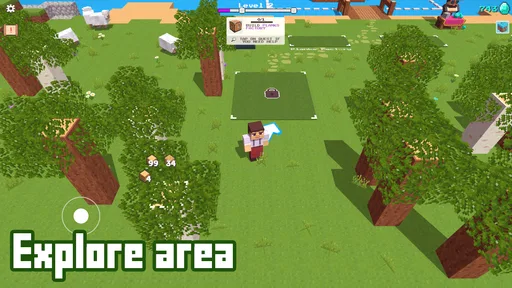
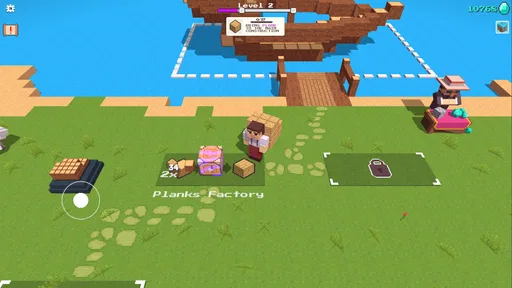
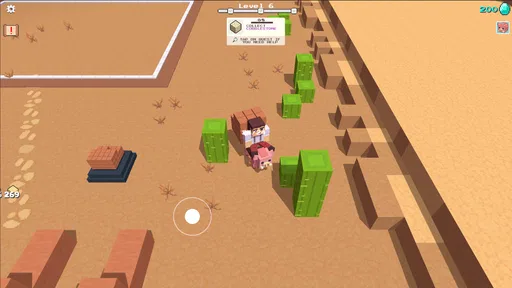
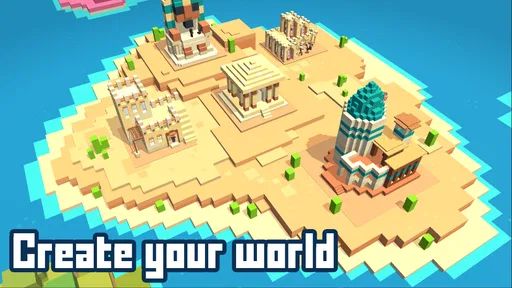
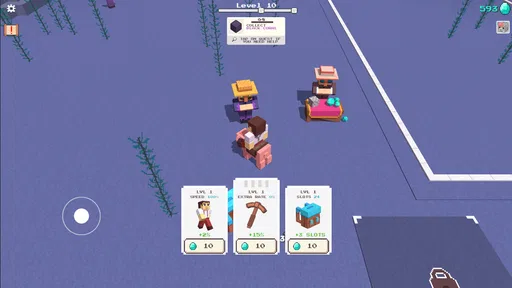
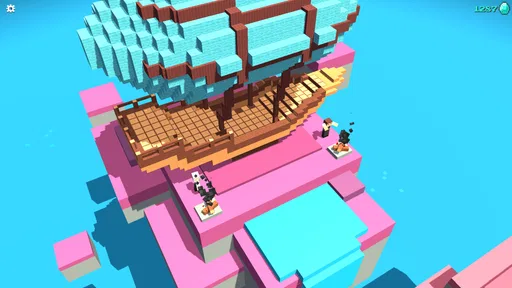
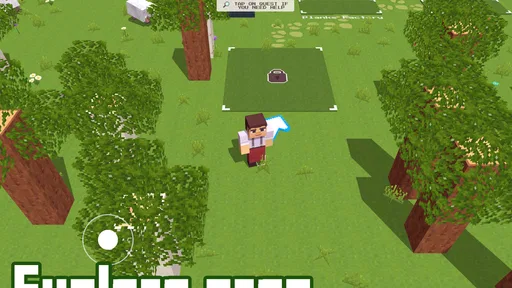
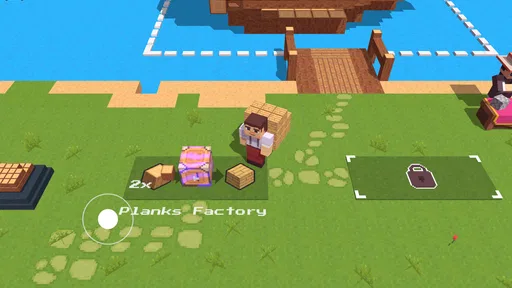
Our Review of CubeCrafter
 Analysis by Appyee
I approached CubeCrafter as a relaxed role-playing game rather than a full-scale sandbox adventure. Its central idea is easy to understand: collect block-shaped resources, turn them into structures, and gradually shape a personal world. That simplicity is the main reason I kept playing. It gives me a clear task almost immediately, without asking me to learn a large set of rules before the first useful action.
That also explains who will enjoy it most. If you like short sessions, visible progress, and the satisfaction of watching a small settlement become more developed, this is an approachable choice. If you want deep character development, a large story, or the unrestricted creativity associated with traditional building sandboxes, I would look elsewhere. CubeCrafter sits between a casual resource game and a lightweight building-focused role-playing experience.
How I judged the game before recommending it
My first decision criterion was the pace of progress. A resource game can become tiring when gathering feels like a chore, while a building game can feel empty if every structure is purely decorative. Here, the appeal comes from the relationship between the two: collecting has a purpose because it feeds construction, and construction gives the next round of collecting a reason to exist.
I also paid attention to how well the game works in ordinary moments. This is the sort of title I would open while waiting for an appointment, taking a short break, or sitting on a commute with enough time for a few actions but not necessarily a long uninterrupted session. The block-based presentation makes the objective readable at a glance, which is useful when I return after a day away and need to remember what I was doing.
Another important test was whether the experience felt friendly to newcomers. CubeCrafter is free to download and suitable for Everyone, so its broad presentation matters. The visual language is playful rather than intimidating, and the basic loop does not require prior knowledge of role-playing games. I can recommend it to someone who wants something more active than a simple idle title but less demanding than a complex crafting adventure.
Finally, I considered how much commitment the game asks for. The developer is SayGames Ltd, and the game has reached over ten million installs with a 4.4 average from around 127 thousand ratings. That level of adoption suggests that the straightforward format has found a substantial audience, although popularity alone is not a reason to install it. For me, the more useful question is whether its limited, repeatable loop matches the way I want to play.
The first session: clear goals without a heavy tutorial
The opening experience is built around understanding the basic exchange: gather materials, use them to create something, and let the new structure open the way to further progress. I like that the game does not bury this idea under a long explanation. The objects on screen communicate what matters, so I can learn by doing rather than reading a manual.
That clarity is especially helpful on a phone. Small screens are not ideal for games with dense menus, and a complicated interface can make a resource-management title feel like work. CubeCrafter keeps its visual identity simple enough that the world remains the focus. I can usually tell what deserves attention without stopping to inspect every corner of the interface.
The trade-off is that players looking for a dramatic beginning may find the introduction modest. There is no need to expect the kind of narrative hook that would carry a story-driven role-playing game. The motivation is practical and visual: I want to see the next part of the world take shape. That is a valid design choice, but it means the game depends heavily on whether I enjoy incremental improvement.
Why the resource loop works better than it first appears
The most satisfying part of the experience is not collecting by itself. It is deciding when a resource should be used immediately and when it is better to keep gathering before committing to a structure. Even without turning the game into a spreadsheet, I found that this small decision adds useful friction. Spending everything at once can produce a quick reward, while saving for a more meaningful construction goal makes the next few minutes feel more purposeful.
My practical tip is to treat each play session as a small project. Before gathering, I choose one construction target rather than tapping through every available option. That prevents the loop from becoming unfocused and helps me notice whether the game is actually moving forward. It also makes short sessions feel complete: I collect, reach a target, build, and stop at a natural point.
A second useful habit is to avoid judging progress only by the amount of material on hand. The better measure is what those materials unlock in the world. A large stockpile can feel strangely unrewarding if it does not lead to a visible change, whereas a smaller amount spent on a structure can make the whole environment feel more alive. This is one of the game’s quiet strengths: it turns otherwise ordinary resource gathering into a visual before-and-after process.
Building a world without the pressure of a full sandbox
CubeCrafter’s structures give the game its identity. I am not simply collecting numbers for an abstract upgrade screen; I am using resources to create recognizable changes in a block-shaped setting. That makes the progress easier to appreciate than in games where improvements are hidden inside statistics.
At the same time, I would not describe it as a replacement for a large creative sandbox. The attraction here is guided construction within a defined progression loop, not unlimited architectural freedom. Players who enjoy designing elaborate homes, experimenting with complex systems, or making their own rules will probably feel constrained. I found the restrictions useful because they keep the game focused, but they also define its ceiling.
This distinction matters when choosing between categories. Compared with a pure idle resource game, CubeCrafter gives me more visual involvement and a stronger sense of place. Compared with a deep crafting or survival title, it asks for less planning and offers a gentler pace. Compared with a narrative role-playing game, it provides fewer reasons to care about characters or plot. Its best position is the middle ground between those experiences.
Where the game wins for everyday play
The strongest use case is a player who wants a reliable five-to-fifteen-minute activity that can be resumed without reconstructing a complicated plan. For example, I can open it during a lunch break, gather enough resources for one structure, complete that project, and put the phone away. The session has a beginning, a small objective, and a visible result, which is more satisfying than endlessly collecting without a clear endpoint.
It also works well for people who enjoy calm visual feedback. The block-based world makes progress easy to see, and that can be more motivating than a list of percentage bars. I do not need to remember a detailed story or manage a large party of characters. The world itself is the main record of what I have accomplished.
Another advantage is accessibility of tone. Because the game is rated Everyone, its presentation is suitable for a broad audience. I would still encourage parents to consider the presence of optional in-app purchases before handing a device to a child, but the basic concept is easy to understand and does not rely on mature themes.
The game is also a good fit for players who dislike being thrown into a huge map with no idea what to do next. Its focused loop narrows the decision space. That can feel refreshing after a demanding open-world game, especially when I want progress without a long checklist of quests, equipment comparisons, and exploration routes.
Where another category may fit better
I would skip CubeCrafter if my main goal were a rich role-playing journey. The game’s appeal is in gathering and construction, not in following a complex character arc. Someone choosing a role-playing game for dialogue, dramatic choices, or a strong cast should select a story-led alternative instead.
I would also choose a traditional sandbox if creative freedom mattered more than guided progress. In a sandbox, the fun may come from deciding what to build and how to organize a world without being directed toward a particular sequence. CubeCrafter is more structured. That structure helps me maintain momentum, but it limits the kind of personal expression I can expect.
Players who prefer competitive action may find the experience too gentle. The game does not appeal to me when I want fast combat, precise timing, or a demanding multiplayer challenge. Its satisfaction is cumulative rather than explosive. I play it to make a little progress, not to prove a skill against another person.
There is also a difference between this and an idle game. CubeCrafter is more engaging when I actively participate in collecting and construction, so it may not suit someone who wants a title that does most of the work in the background. Conversely, players who find idle games too passive may appreciate having clear actions to perform without the intensity of an action game.
Friction points and the cost of changing games
The main limitation is repetition. The same resource-to-structure rhythm is the reason the game is easy to pick up, but it can also become predictable. I recommend trying it with modest expectations: the loop is meant to be comfortable and repeatable, not constantly surprising. If I need frequent new mechanics to stay interested, the simplicity may wear thin.
Optional purchases are another consideration. The game is free, but its in-app items range from $1.99 to $29.99 each. I would decide in advance whether I am willing to spend anything, because a clear personal limit makes the experience easier to evaluate. The free starting point is useful for testing the loop, while the presence of higher-priced items means it is worth being deliberate rather than treating every prompt as part of normal progression.
The current version is 1.17.14 and requires Android 8.0 or later. For a person using an older device, checking compatibility before planning to play is sensible. On supported hardware, the game’s uncomplicated presentation should be less demanding than a visually elaborate open-world role-playing title, but I would still keep expectations realistic about what the game is designed to deliver.
Switching away from CubeCrafter has a particular cost: I would lose the partially developed world and the momentum created by its next construction goal. That is not a financial switching cost so much as a motivational one. If I have already invested time in making the environment grow, another game may feel less immediately rewarding because it starts from zero with a different system to learn.
On the other hand, switching to a deeper alternative may be worthwhile if I keep wanting more control. The trade-off is clear: a richer sandbox or story-based game can offer more variety, but it usually demands more attention. CubeCrafter wins when convenience and visible progress matter more than depth.
Small strategies that make the loop more satisfying
I found three habits particularly useful. First, I set a single construction goal before collecting. This reduces aimless tapping and gives each short session a finish line. Second, I pause after completing a structure instead of immediately chasing every next objective. Taking a moment to look at the changed world helps preserve the visual reward that makes the loop worthwhile.
Third, I use the game as a low-pressure reset rather than trying to maximize every action. The temptation in resource games is to optimize constantly, but CubeCrafter is more enjoyable when I allow the simple rhythm to remain simple. If I turn every collection decision into a calculation, I lose the relaxed quality that separates it from more demanding crafting games.
These habits also help answer an important question: can the game be played casually without falling behind? In my experience, its design is better suited to occasional progress than to a strict daily routine. I can return, identify the next construction task, and continue. That makes it a practical companion for irregular play, provided I am comfortable with a gradual pace.
Who should install it
I recommend CubeCrafter to anyone who likes building progress from small actions, especially players who want a role-playing-flavored game without a complicated story or combat system. It is a good match for casual phone play, visual progression, and resource gathering that leads to tangible structures.
I would be more cautious about recommending it to experienced sandbox players, strategy fans who want deep optimization, or role-playing fans who measure quality by narrative and character development. Those players may enjoy the first look but eventually want systems that this focused format is not trying to provide.
The free price makes trying it straightforward, and the Everyone rating broadens its suitability. Its large audience and 4.4 average suggest that the basic formula connects with many players, but the right decision still depends on tolerance for repetition and interest in guided construction. I would install it when I want something clear, colorful, and easy to resume rather than something ambitious and demanding.
My recommendation after playing
CubeCrafter succeeds because it understands its own scale. It does not need a huge story or a complicated rule set to make a few minutes of play feel productive. Gathering materials and turning them into structures creates a direct reward, and the growing world gives that reward a visual presence.
Its weaknesses are equally clear: the loop can repeat, creative freedom is more limited than in a full sandbox, and optional purchases deserve attention. Those are not deal-breakers for me, but they should shape expectations before installing.
My recommendation is to try it if you want a relaxed building game with light role-playing flavor and short, goal-oriented sessions. I would choose a different category if I wanted a gripping story, unrestricted construction, or competitive action. For everyone in between, this is an easygoing way to turn spare moments into visible progress, and that focused purpose is exactly where the game feels most convincing.
Verdict
Strengths of CubeCrafter
- Relaxing block-matching gameplay that is easy to learn.
- Short levels make it suitable for quick gaming sessions.
- Bright 3D visuals give the game a cheerful appearance.
- Progression gradually introduces new challenges and goals.
- Works well for players who enjoy casual puzzle games.
Limitations of CubeCrafter
- Some levels can feel repetitive after extended play.
- Difficulty may increase sharply in later stages.
- Ads can interrupt the experience between levels.
- Limited gameplay variety may reduce long-term appeal.
- Some upgrades or bonuses may encourage in-app purchases.
Other Releases by SayGames Ltd
View All
Turbo Stars - Rival Racing
Racing4.6

Johnny Trigger: Action Shooter
Action4.6

DOP 4: Draw One Part
Puzzle4.4

DOP: Draw One Part
Puzzle4.4
Similar Picks in This Category
View All
Hair Dye
CrazyLabs LTD4.4

Monster High™ Beauty Salon
CrazyLabs LTD4.5

Bus Simulator - Bus Games 3D
Jima Apps4.4

Flight Pilot: 3D Simulator
Wildlife Studios4.1


Super Stylist Fashion Makeover
CrazyLabs LTD4.4
Frequently Asked Questions
What is CubeCrafter and what do you do in the game?
CubeCrafter is a casual crafting and management game built around collecting resources, processing materials, and expanding your production setup. You begin with simple tasks and gradually unlock new machines, areas, and upgrades. The main appeal is its relaxed progression loop: gather cubes, improve your operation, and reinvest your earnings to make future production faster and more efficient.
Is CubeCrafter free to download and play?
Yes, CubeCrafter can generally be downloaded and played for free on supported mobile devices. However, the game may include optional in-app purchases, such as currency bundles, boosts, or other convenience items. You can make progress without paying, although purchases and rewarded advertisements may help speed up upgrades. It is a good idea to check your device’s purchase settings before playing.
Does CubeCrafter require an internet connection?
CubeCrafter may allow some basic gameplay while offline, particularly for resource collection and routine management, but certain features can depend on an active internet connection. Advertisements, cloud synchronization, updates, and some promotional rewards may not work without connectivity. If you want the most complete experience, including optional bonuses and reliable progress saving, playing online is recommended.
Is CubeCrafter suitable for children?
CubeCrafter uses simple controls, colorful visuals, and an easy-to-understand progression system, making it accessible to many younger players. Nevertheless, parents should review the age rating and store listing because the game may contain advertisements and optional in-app purchases. If children use the device, enabling parental controls can help prevent accidental purchases and limit exposure to unsuitable advertising.
What are the main advantages and possible drawbacks of CubeCrafter?
The biggest strengths of CubeCrafter are its straightforward controls, relaxing gameplay, clear upgrade goals, and satisfying sense of gradual improvement. It is easy to start playing in short sessions, yet there are enough unlocks to encourage longer-term progress. On the other hand, some players may find the repeated resource-gathering tasks and upgrade cycles predictable, while advertisements or waiting periods can interrupt the otherwise smooth experience.
Play our best games!


